St Francis Leprosy Guild is the UK’s Catholic leprosy charity.

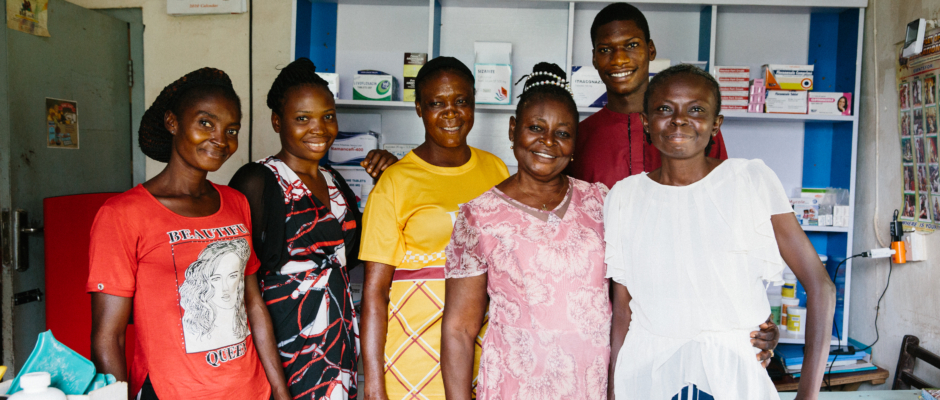
Photo credit: Tom Bradley


Inspired by our patron saint, St Francis of Assisi, we have cared for people with leprosy for 130 years. We operate in twelve countries in Africa, Asia and in Brazil where leprosy is endemic.

By supporting over thirty leprosy centres and projects, we play our part in caring for those affected by the disease and working towards a leprosy-free world.

We fund research projects, hospitals, rehabilitation centres and capital equipment. We fund Active Case-Finding, a programme that finds, diagnoses and treats people with leprosy before it causes disability and spreads into communities.

We believe that a leprosy-free world is within sight; if not today, then soon.


What we do

​​​​Since its foundation, SFLG has provided care to people with leprosy; treating patients and the disabilities caused by the disease. Nursing care may last a patient’s lifetime and extend to family members who are outcast from society.

Now our key strategic focus is to find and diagnose people affected by leprosy as early as possible and to start Multidrug Therapy (MDT) immediately. Early diagnosis and treatment with MDT stops the transmission of leprosy and prevents lifelong disabilities from developing.

In 2017, SFLG devised a new operational strategy to support the global goal of Zero Leprosy and to define the work that we are supporting, this strategy is called TRACE. To read what TRACE stands for, visit our website.


Our Vision, Mission and Values

Our Vision is a leprosy-free world.

Our Mission is to end leprosy’s devastating impact everywhere for everyone.

Our values align with the Five Franciscan Values:

  • Service
  • Respect for creation
  • Reverence
  • Peace and Justice
  • Humility

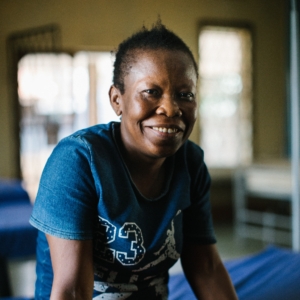
Promise (37), Nigeria

Promise is in a hospital, 2-3 hours drive away from her home.

She lives with her husband and three children, 3, 5 and 10. Her husband is older and is a clothes trader. He was also affected by leprosy. She’s a housewife. She was in school until class 3.

She was diagnosed with leprosy in 2004, as a teenager, a year after first getting symptoms.

“My legs and hands were swelling up. At first, we went to hospital and my family paid for treatment. We went to three hospitals. Some I stayed for a couple of weeks, and one for a month. I don’t know how much my family paid.

“I stopped school at this time because of the swelling. I was really sad that I had to leave school. I remember feeling uneasy because we didn’t know the problem. Once I was diagnosed, I felt a kind of relief.

“I’d not heard of leprosy before, but they told me. They told me everyone carries it, but it only manifests in some.” [NOTE – THIS IS NOT CORRECT].


This is Promise’s first time in Mile Four Hospital. She’s been here for four months getting dressing changes on the ulcer on her right foot.

“It’s come and gone at different times over the past 20 years.” She says of her ulcer. “It was RedAid Nigeria who referred me here.”

She pays 30,000 N a month for someone to help attend to her – fetch water, cook and buy water etc.

“Initially my sister-in-law brought me here and was going to look after me. But she unexpectedly died shortly after arriving. She was diabetic and had hypertension.

“I’m not happy to be away from home, away from my children. They’re in school.”

The ulcer became very bad as Promise stopped wearing MCR sandals, as when her foot swells a bit, they no longer fit. She has some minor clawing on her hands.

“When the wound heals, I’d like to start my own business, but I need to find funds for that. If I met someone who’d just been diagnosed with leprosy, I’d counsel them and tell them to get treatment…There’s a part of me that wishes it never happened. I still feel shame about it.”

Sr Henrietta counsels her a bit about it. She seems very depressed about it, though hides it a lot of the time.

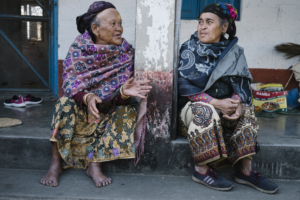
Dil (71) & Radhika (69), Nepal

Dil and Radhika are living in a leprosy settlement in the south of Nepal. It is run by NELRA, a Nepali organisation that manages/aids a few leprosy settlements amongst other things. There are about 18 houses, and it started about 35 years ago.

Dil and Radhika are neighbours. Dil lives here at no 2, they’re sitting on her porch. Radhika lives at number 4. They both came here at the same time, 31 years ago.

Dil has no problems from leprosy but thinks she might have high blood pressure. Tham is trying to persuade her to come to Green Pastures Hospital to fill out some forms so she can get a government allowance for her high blood pressure.

Dil’s husband died 2 years ago, he had a respiratory problem. He also used to visit Green Pastures Hospital often because of recurring ulcers.

Radhika lives with her son, daughter-in-law and grandchildren. She has anaesthetic feet, and Tham the GPH counsellor is persuading her to get new shoes. “My son earns and we able to feed ourselves, so life goes on.”

They lived in a different community before this one and then all came together to build a community here.

“Before it was pretty isolated. There was no water supply when we got here, so used to go to the river. But the older we’re getting, the better this place is getting.”