
The following article was written by Edward Marshall, a parishioner and CAFOD volunteer.
“To love our neighbour is not an abstract idea…” | Faith in Charity Reception
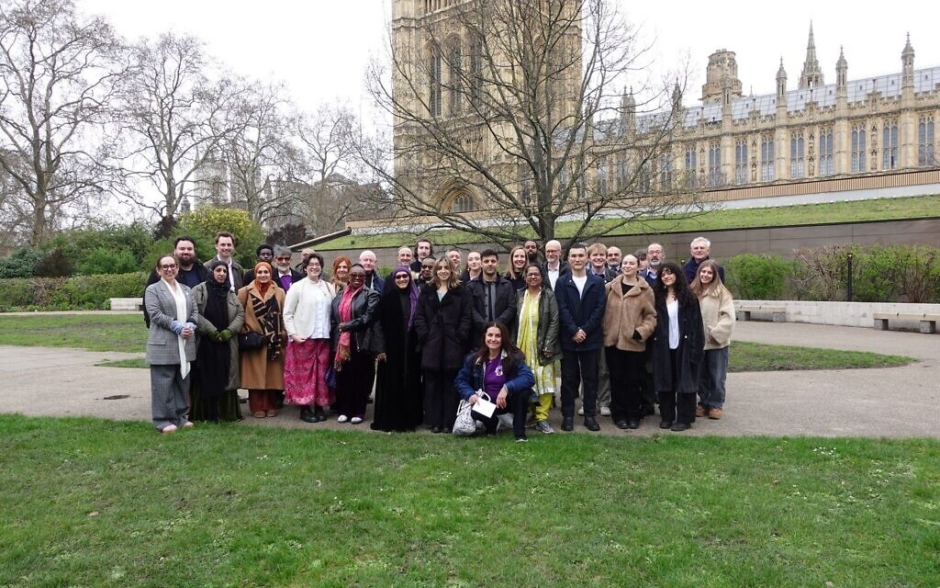
A few weeks ago, I had afternoon tea at the House of Lords. The occasion was intended to celebrate the invaluable role faith-based organisations play in promoting the common good.
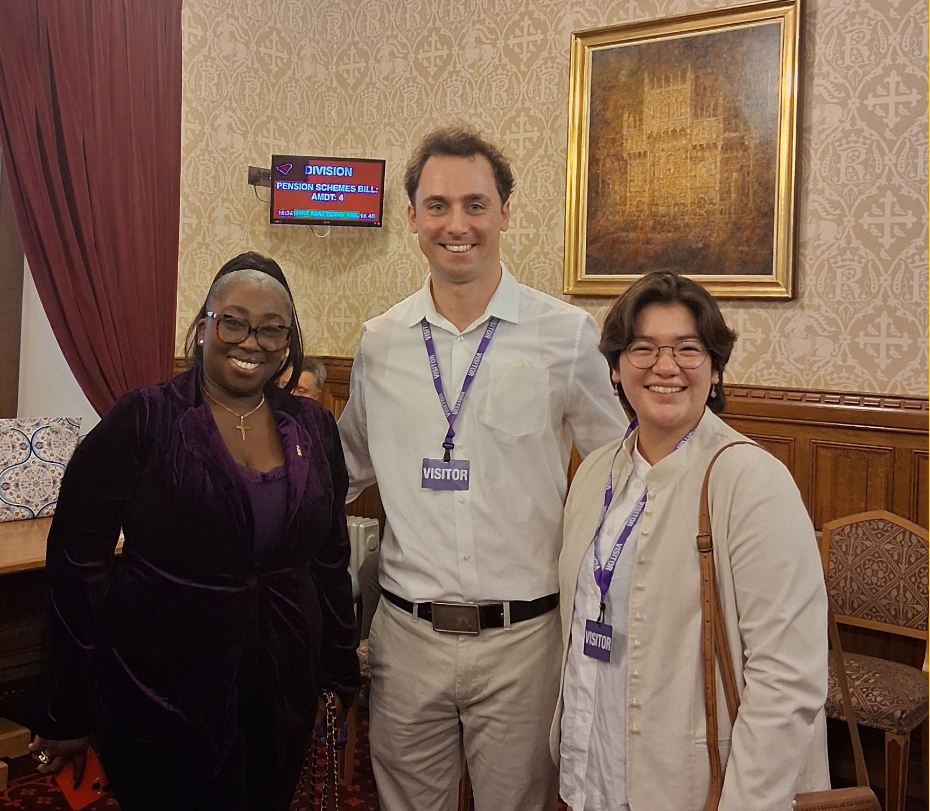
I was there with fellow volunteers Liz (a former Walsingham House staff member), Andrea, and Nana, representing the work of CAFOD. Together we met a host of other volunteers from Muslim, Jewish, and Christian organisations working to combat injustice both at home and abroad. The afternoon was arranged by the Aziz Foundation, a London-based charity focused on addressing the social challenges faced by British Muslims in our society.
In between balancing finger sandwiches in one hand and tea, cup, and saucer in the other, I listened as representatives spoke about the work they were doing in society. Members of the youth movement of Liberal Judaism, for example, spoke of how their social action activities—serving at food banks, creating environmental projects, and helping with refugee initiatives—are fruits that grow naturally from their living faith and Jewish heritage.
Joanna Kelly of St James’ Church Piccadilly, which supports the homeless through outreach programmes in central London, spoke poignantly about how we can work together to serve human needs, saying: “We are not defending God from one another; we are discovering God in one another.” And the founder of an interfaith food bank in Waltham Forest, PL84U AL-SUFFA (“Plate For You”), Saira Begum Mir BEM, gave witness to the simple and practical ways people can come together over shared meals to rebuild lives, communities, and mutual understanding.
Our own Andrea Speranza reflected on the foundations of Catholic Social Teaching: that the command of Jesus to love our neighbour is not an abstract idea but the very foundation of our faith, and that our neighbour is not confined to the people we happen to know, but includes anyone, anywhere, who may be in need of help. Throughout these reflections, and in the conversations that followed, I witnessed one of the many meanings of solidarity: an attitude of unity between strangers brought about by a shared determination to love one another despite all the fear cultivated at the edges of society.
It is striking how afternoon tea at the House of Lords can feel quietly significant. Yet it was not so much the setting that gave the occasion its significance, but the people. There was a rare honesty in the room: different faiths, certainly, and perhaps different motivations, yet a shared passion to do whatever is within our means to serve those most in need in our society, and to do so with humility.
I left with a renewed sense that our communities are not defined by the walls and stereotypes so often portrayed, but by the quiet, steady work of those building bridges in solidarity with the poor.