Dear friends of Caritas Brentwood,

Welcome to our Papal Insights for this month. We hope you all had a wonderful Christmas, filled with the light and the joy of Christ’s arrival: God becoming man, so man could become God (as St Athanasius might say).

Over the last month, Pope Leo has written and recorded lots of messages, addresses, homilies, etc. Below you will find just a handful of quotes from him that we found to be particularly inspiring, resonating with our mission as Caritas Brentwood.

We have provided a couple of quotations from the Pope from the first few days of this year (2026) – we are slightly breaking our own rules by providing January quotes in our edition for December – but they were too good not share.

Messages

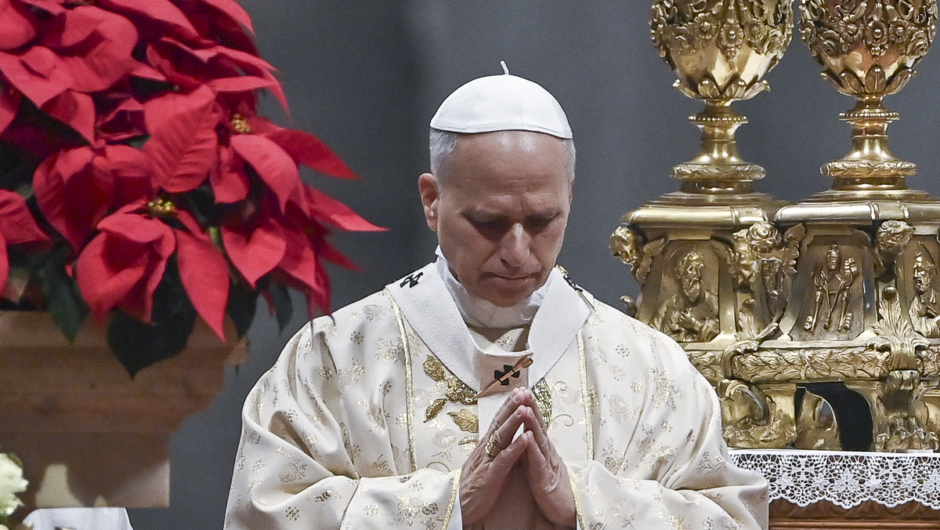
25th December, Urbi et Orbi Blessing

We couldn’t write this edition of Papal Insights without mentioning the Pope’s Urbi et Orbi blessing message on Christmas Day. The tradition of this message dates back to (at least) the 1200s, and has become a Christmas tradition of subsequent popes to offer this type of solemn blessing on Christmas Day.

Meditating on the incarnation, Pope Leo spoke of Jesus’ desire to live the life of a human:

The eternal Word of the Father whom the heavens cannot contain chose to come into the world in this way. Out of love, he wanted to be born of a woman and so share our humanity; out of love, he accepted poverty and rejection, identifying himself with those who are discarded and excluded.

Not only did the Son impoverish himself by taking on the frailty of a human baby, but He also chose to be born into the poverty of a stable, for there was no room at the inn – and that is before we even begin to speak about the rest of his life and ministry.

From the very moment of his birth, Jesus chose to live in solidarity with outcasts and the excluded. God expresses his power not in worldly terms (health, wealth and control), but rather expresses his power through the radical love of his Creation.

What does this teach us about God’s priorities?


The Pope went on to explain that we must all take responsibility for the actions we take. Evoking imagery of Jesus’ teaching about the two men, one with a splinter in his eye and the other with a log, Leo said:

…Responsibility is the sure way to peace. If all of us, at every level would stop accusing others and instead acknowledge our own faults, asking God for forgiveness, and if we would truly enter into the suffering of others and stand in solidarity with the weak and oppressed, then the world would change.


To read the Pope’s full message, click here<<
2nd January, SEEK26 Video Message

Every year in the United States, there is an annual Catholic Youth Conference called SEEK26. This year, the Pope recorded a special video message for those attending. In his recorded address, he encouraged those in attendance to open up their hearts to encounter Christ over the course of the conference. However, focusing on the story of Jesus calling the disciples, he homes in on the line from the Gospel of St John: “What do you seek?

The Pope explains:

Jesus asks the disciples this question because he knows their hearts. They were restless — in a good way. They did not want to settle for the normal routine of life. They were open to God and were longing for meaning. 

He goes on to say:

Today, Jesus directs this same question to each one of you. Dear young people, what do you seek?…Perhaps your hearts are also restless, searching for meaning and fulfilment, and for direction in your lives. The answer is found in a person. The Lord Jesus alone brings us true peace and joy, and fulfils every one of our deepest desires.

We have spoken before about the vocational aspect to much of the work we do, we see plenty of people who have dedicated and still dedicate much of their lives to the social action and charitable work. The idea that the answer to fulfilment is found in the person of Jesus is indeed made manifest in the lives of these people, many of them guided by the principle outlined in Matthew 25:40.

We believe that many of these people would expand upon the words of Pope Leo, they would say: The answer is found in Jesus, and Jesus is found in the poor.


To read the text of the full video message, click here<<

Homily

6th January, Solemnity of the Epiphany of the Lord

Lastly, we wanted to mark the occasion of the end of the Jubilee Year. Begun by Pope Francis in 2024 and closed by Pope Leo XIV, the Jubilee Year has shown us an ever-growing need for compassion, forgiveness and the peace of Christ across the world but also in our own communities. One of the graces granted to us in the year of Jubilee was to see that there is much more work that needs to be done on the road to healing.

At the Mass of the Epiphany, during which the last of the Holy Doors was closed, the Pope spoke of the lessons that the Epiphany offers us. In the same way that the Magi travelled to meet the new King, so did pilgrims during the Jubilee Year. However, these journeys that we undertook as pilgrims must not be in vain – we must come away changed:

Around us, a distorted economy tries to profit from everything. We see how the marketplace can turn human yearnings of seeking, traveling and beginning again into a mere business. Let us ask ourselves: has the Jubilee taught us to flee from this type of efficiency that reduces everything to a product and human beings to consumers?

The treasures that we have stored up for ourselves in this jubilee year are not a currency that we can barter with, they are encounters with Christ himself. Pope Francis once said that our encounter with the Body of Christ in the Eucharist must not send us away unmoved or unchallenged, we would continue that our encounter with the mystical Body of Christ in the Church should have the same effect.

Pope Leo then goes on to ask:

After this year, will we be better able to recognize a pilgrim in the visitor, a seeker in the stranger, a neighbour in the foreigner, and fellow travellers in those who are different?


To read the full homily text, visit the Vatican website here<<