Dear friends,

Welcome to Papal Insights for both the month of March and Easter 2026. Whilst we haven’t covered everything the Pope said from Easter week (choosing to focus on Palm Sunday and Easter Sunday), we highly recommend that you read the two other papal homilies during the Easter Triduum – click below to read them.

We hope that you had a blessed Easter Triduum and that you continue to have a blessed Eastertide!

8th March – Pastoral Visit: Parish of S. Maria della Presentazione

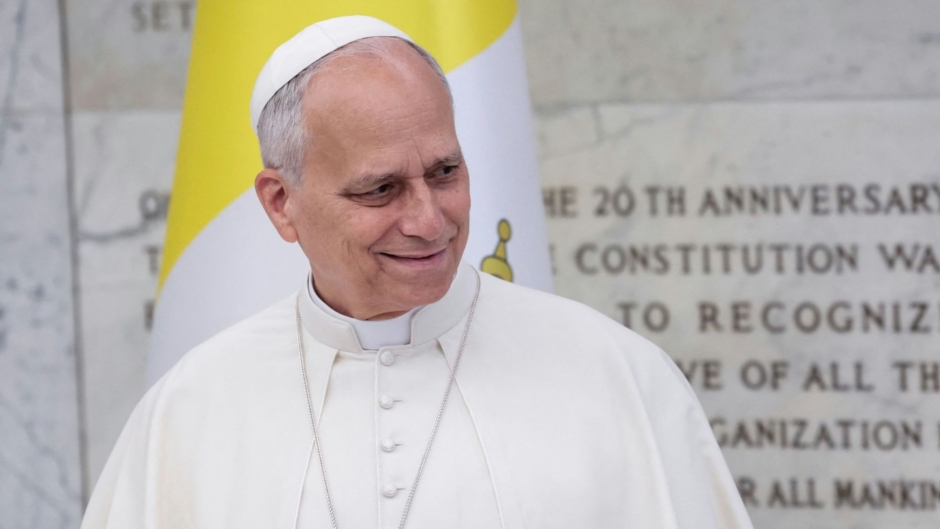
On the Sunday 8th March, the Pope carried out one of his pastoral visits to a parish, as part of his role as Bishop of Rome. At Mass on Sunday, he offered his homily on the Gospel reading of the ‘Woman at the Well’. The Gospel account speaks of a broken woman who is a social outcast within her community, it is in this framework that Pope Leo explains men and women, similarly, come to a parish: “wounded in their soul…and thirsting for hope.” It then becomes the parish’s mission to show the “closeness of Jesus”.

The Holy Father then encourages the parish let that mission permeate all aspects of the parish’s life “like a mother takes care of her children”. The parish is not a place for condemnation, but welcome: “listening to them and supporting them in the face of danger.”

There is a certain view that the parish is simply there to tend to the spiritual needs of the individual (that is to say: administer the sacraments); but this is only part of the picture. Whilst is it is certainly important that the Church administer the sacraments to it flock, there is also the need to look beyond it’s own four walls and notice the needs of the local area and community in which it finds itself. The Church is not of the world, but in the world – as the saying goes – and it cannot ignore the world that it inhabits.

Understanding the parish as like a mother, who takes care of her children and doesn’t condemn them:

  • How we can we look to reach out to those in need?
  • How can we support those people?

To read the full homily, click here<<

29th March – Palm Sunday

Following the Passion reading on Palm Sunday, the Holy Father took the opportunity to reflect on the kingly nature of Christ (which is represented by his triumphal entry into Jerusalem), contrasting it with the king we see in the accounts of the Passion.

How different these two images look when we compare them, but here Pope Leo begins to illustrate the type of King that Jesus is: the “King of Peace,” he explains “remains steadfast in meekness, while others are stirring up violence. He offers himself to embrace humanity, even as others raise swords and clubs.” In the moment in which he finds himself betrayed by a friend and surrounded with brandished weapons, he chooses meekness – even chastising St Peter who, attempting to defend Jesus, strikes one of the servants present.

When we look at our communities and the world, we see that we are surrounded by violence – we seem to be unable to escape it. But here, Our Lord brings us to a crossroads: we either choose violence, or we conform our hearts to His and refuse to pick our weapons. As we look at from the foot of the cross, “we can see a crucified humanity. In his wounds, we see the hurts of so many women and men today.”

Jesus cries “My God, My God, why have you forsaken me?”, in this cry, the Pope explains:

“We hear the weeping of those who are crushed, who have no hope, who are sick and who are alone. Above all, we hear the painful groans of all those who are oppressed by violence and are victims of war.”

Blessed are the peacemakers.


To read the full homily, click here<<
5th April – Easter Sunday

The following Sunday, on Easter morning, the Pope reflected on the new life that is brought through the Resurrection of Our Lord. We are reminded that not only is death not the end, but also that every “death” that we face can be brought back to life and radically changed by God.

The Pope, inspired by Evangelii Gaudium (Pope Francis), quotes that the resurrection is:

“Not an event of the past; it contains a vital power which has permeated this world. Where all seems to be dead, signs of the resurrection suddenly spring up. It is an irresistible force. Often it seems that God does not exist: all around us we see persistent injustice, evil, indifference and cruelty. But it is also true that in the midst of darkness something new always springs to life and sooner or later produces fruit” (n. 276).

He describes that Easter gives us a renewed hope. As Christians, Hope is not mere optimism that things will get better, but rather a knowledge that God can do what we cannot do alone.

Crucially, he explains the symbolism behind the resurrection taking place on Sunday – the first day of the week:

“The day of Christ’s resurrection thus takes us back to that first day when God created the world, and at the same time proclaims that a new life, stronger than death, is now dawning for humanity.”

Friends, as mentioned before, we can see injustice in almost every aspect of the world around us, and every week it seems like there is something else that we should fear. But God does not want us to live in fear, rather he wants us to allow him to do something new, working with us. He wants us to invite him into those places in which peace cannot be found – those places of “death” – and bring new life to it.


To read the full homily, click here<<