Dear friends of Caritas Brentwood,

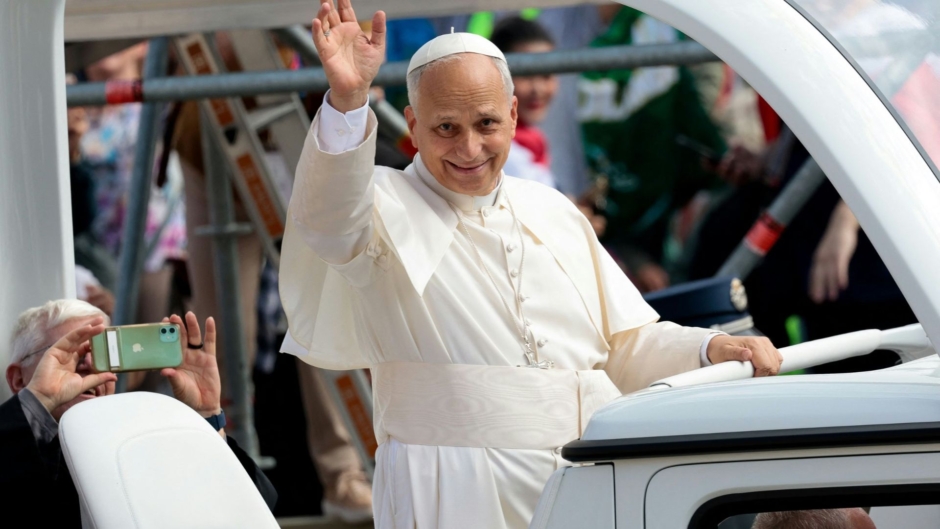
Welcome to our Papal Insights, in this edition we have a couple of the Pope’s weekly Angelus addresses as well as a letter to Franciscans. Since taking his office, several themes have begun to crop up in Pope Leo XIV’s communications, these are present in the quotes used below and are very much in continuity with the teachings of Pope Francis; however, it is heartening to see Pope Leo beginning to develop his own style and his own way of addressing people and targeting issues.

If there is anything that the Pope says in February that you would like us to reflect on, get in touch with Michael: [email protected]


Angelus

18th January

On the Sunday 18th January, during one of his Angelus addresses, the Pope took the opportunity to speak about the modern-cultural idea of ‘success’ and the need for humility in our actions. He described the life of St John the Baptist, who “knew that he was sent to prepare the way of the Lord” and that once the Lord arrived he promptly “stepped out of the spotlight”.

In our world today, stepping out of the spotlight is often seen as a sign of failure and not success – “how important his [St John the Baptist’s] witness is for us today!” says Pope Leo. He is correct. Having people’s attention is viewed as the ultimate currency. If we can captivate audiences, be visible on screens, be affirmed and approved: we are important. But this was not the way of St John the Baptist, nor was it the way of Our Lord.

The Holy Father says pursuing these sorts of goals causes “suffering and division”, it “gives rise to lifestyles and relationships that are fragile, disappointing and imprisoning.”

Instead, we must not look to these worldly marks of success. The true mark of success is to know ourselves to be “loved and wanted by our heavenly Father.”  The love that we know and experience from the Father is not the same love we express about the latest song from our favourite artist, or the latest trend, but instead:

The love of which Jesus speaks is the love of a God who even today comes among us, not to dazzle us with spectacular displays, but to share in our struggles and to take our burdens upon himself. In doing so, he reveals to us the truth about who we are and how precious we are in his sight.


To read the full Angelus address, click here<<

25th January

Just a week later, the Pope used another one of these Sunday Angelus addresses to express the importance of trusting in God, especially in difficult situations.

Within the context of the Gospel reading for that day, when Jesus started his ministry and began to preach “the Kingdom of Heaven is at hand”, the Pope explains that, like Jesus, we too must be ready to make bold decisions, take bold action and be ready to tell the truth. Often we can be “paralysed by indecision” due to “interior struggles or circumstances”, these can lead us to constantly second guess our actions or decide that the ‘time isn’t right’ for us.

However, as the Pope explains, “the Gospel calls us to dare to trust. God is at work at all times; every moment is “God’s time””.

Pope Leo then explained the context in which Jesus’ preaching began. Capernaum was “a predominantly pagan territory” which, due to trade, had been “transformed into a crossroads and a place of encounter.” We should look to imitate Christ in this way,  placing ourselves in locations that are new and different, ready to act with boldness. We must be ready to encounter real people with real stories, and not simply the caricatures or stereotypes that we have come to know. As Pope Leo describes: “the Messiah…transcends the borders of his own land to proclaim a God who draws close to everyone.”

Whether you are looking to start a campaign or local project, God is asking you to have faith in the good work he can do through you.

The Gospel must be proclaimed and lived in every setting, serving as a leaven of fraternity and peace among all individuals, cultures, religions and peoples.


To read the full Angelus address, click here<<

Letter

10th January, To the Ministers General of the Conference of the Franciscan Family

2026 is a special year for Franciscans, since it is the 800th  anniversary since the death of St Francis of Assisi, whose life, actions and works have formed part of a rich Franciscan tradition that is both intellectual and embodied. Pope Leo took the opportunity of such a momentous year to write to a Conference gathering of the leaders of Franciscan communities across the world.

Discussing the origin and importance of the simple word ‘Peace’ in the Franciscan tradition, Pope Leo remarks:

With these essential words, [St Francis] conveys to his friars and to every believer the inner wonder that the Gospel had brought into his life: peace is the sum of all God’s gifts, a gift that comes from above. What an illusion it would be to think that it can be built by human efforts alone! And yet it is an active gift, to be welcomed and lived every day.

The Pope then goes on to recognise the need for peace in our world, something which has marked his papacy since it’s very beginning (see his first Urbi et Orbi blessing from the [something] balcony). He states that St Francis’ witness to peace is something that we can still imitate in our lives right now:

In this age, marked by so many seemingly interminable wars, by internal and social divisions that create mistrust and fear, he continues to speak. Not because he offers technical solutions, but because his life points to the authentic source of peace.

The peace lived out by St Francis was not simply one person’s utopic vision, disconnected from reality, instead – as Pope Leo asserts – it was the opposite:

The Franciscan vision of peace is not limited to the relations between human beings, but also embraces the whole of creation. Francis, who calls the sun “brother” and the moon “sister”, who recognizes in every creature a reflection of divine beauty, reminds us that peace must be extended to the entire family of Creation.

The Pope finishes with a short exhortation:

Dear brothers and sisters, may the example and spiritual legacy of this Saint, strong in faith, steadfast in hope and ardent in active charity towards his neighbour, inspire in everyone the importance of trusting in the Lord, of living a life faithful to the Gospel, and of accepting and illuminating every circumstance and action of life with faith and prayer.

St Francis of Assisi and the life he led is not something that is just for friars and sisters, or just for particularly devout people. Instead, the Franciscan way offers a pattern of radical peace that we can look to emulate in our own lives.


To read the full letter, click here<<